
Art direction for lifestyle brands: shoot the feeling, not the product
By Canelle Stevenson · · 11 min read
Art direction for lifestyle brands is the discipline that decides how a brand looks, feels and behaves in every image it puts into the world, so that a stranger recognises the brand before reading its name. For a lifestyle brand, that matters more than for almost any other category, because what you sell is not only a product. You sell a way of living, and people buy into it through pictures long before they read a product page. This guide explains what art direction means in a lifestyle context, why the brands that get it right shoot the feeling rather than the product, and how to build a visual world that holds together across a website, a feed, a campaign and a shop.
What art direction means for a lifestyle brand
Art direction is the creative decision-making that turns a brand strategy into images: what we show, who appears in the frame, where, in which light, with which colours, props and textures, and what we deliberately leave out. The art director does not necessarily hold the camera. Their job is to make sure the photographer, the stylist, the set designer and the retoucher all work towards the same picture of the brand.
If you want the general definition first, our guide on what art direction is and how it shapes your brand covers the role across every sector. Here we focus on what changes when the brand is a lifestyle brand.
A lifestyle brand is a brand whose value lies in the life it represents: the rituals, places, people and taste it stands for. A pilates studio, a skincare line, a furniture maker, a boutique hotel or an activewear label can all be lifestyle brands. For them, the visual identity is not decoration around the product. It is the product's context, and very often the reason someone wants it.
| Product-led art direction | Lifestyle brand art direction | |
|---|---|---|
| Main subject | The object, isolated and lit | A moment in which the object belongs |
| Question it answers | What is it? | What would my life look like with it? |
| Typical image | Packshot on a seamless background | A morning ritual, a room, a body in movement |
| What makes it work | Precision and clarity | Mood, consistency and a believable world |
| What weakens it | Poor lighting or retouching | Generic scenes that could belong to any brand |
Both have their place. A lifestyle brand still needs clean product images for its shop. The art direction decides how the two sit together, so that the packshot and the lifestyle image clearly belong to the same family.
Shoot the feeling, not the product
The phrase sounds like a slogan, but it describes a practical choice. When a lifestyle brand photographs only its products, every image asks the viewer to evaluate an object. When it photographs the feeling around the product, every image invites the viewer into a scene and lets them imagine themselves in it.
Concretely, shooting the feeling means starting each brief with an emotion and a moment, not with a product list. "The quiet ten minutes after a reformer class, when the body feels long and the light is soft" is an art direction brief. "Hero shot of the water bottle" is a shot list item. The first produces images people stop on and save. The second produces images people scroll past, even when they are technically perfect.
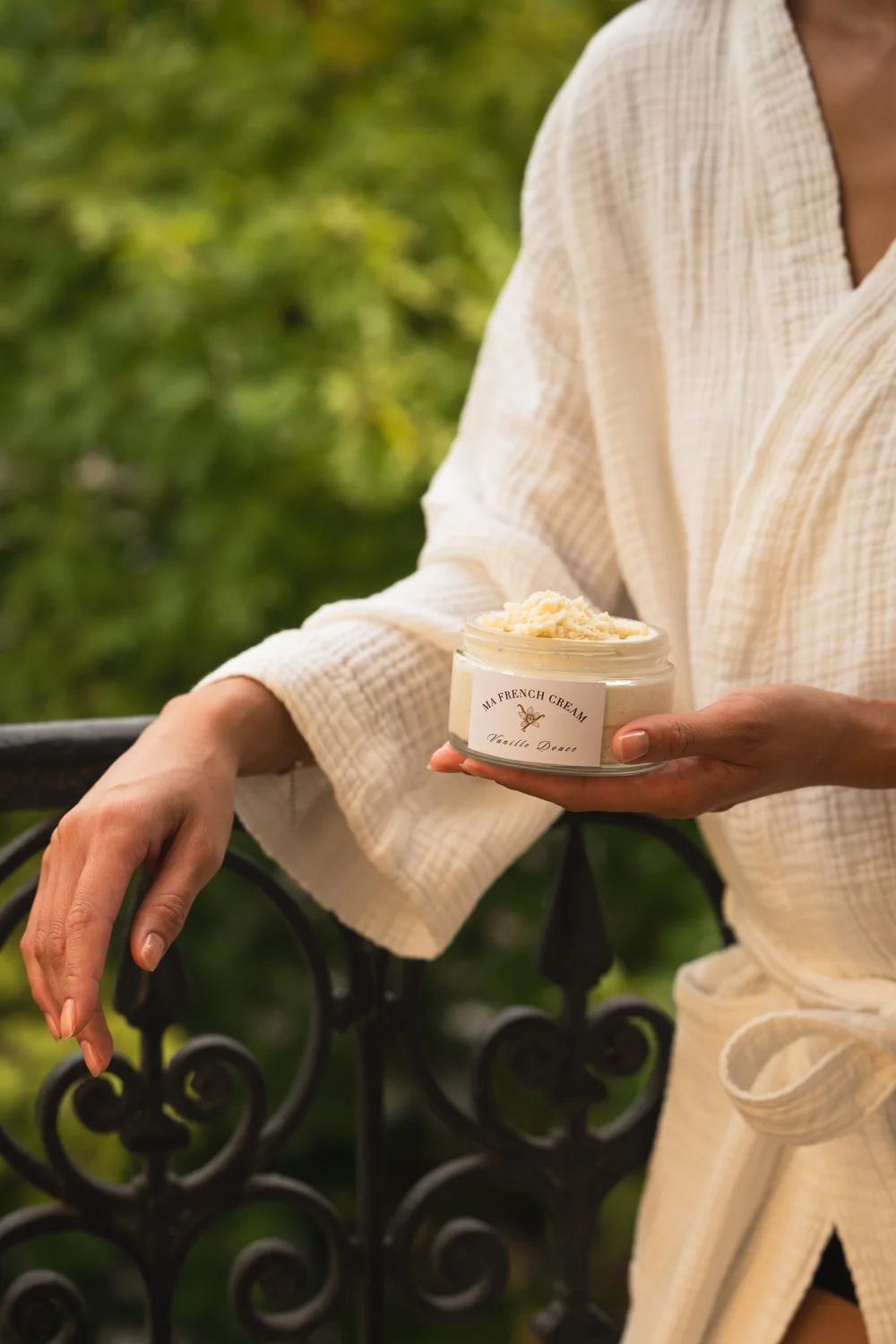 Ma French Cream. See the project
This does not mean hiding the product. In good lifestyle art direction, the product is present, recognisable and often central, but it is shown in use, in a place and with a person who makes sense for the brand. The feeling carries the image; the product is the evidence that the feeling can be bought.
Why real images beat generic ones
There is solid research behind the instinct to avoid generic imagery. In its eyetracking work, Nielsen Norman Group found that users pay close attention to photos that carry real information, such as photos of real people and real products, and ignore images that are there only to decorate a page. Jakob Nielsen sums it up bluntly: "users ignore stock photos of generic people" (Nielsen Norman Group, Photos as web content, 31 October 2010, reviewed 13 August 2026).
For a lifestyle brand, the lesson is direct. A stock image of a smiling woman in a white bathroom tells the viewer nothing about your brand, so their eyes move on. A photo of your actual studio, your actual texture, your actual community gives them something to read, and that is where trust starts.
The building blocks of a lifestyle art direction
A lifestyle art direction is a set of decisions written down clearly enough that anyone who shoots for the brand can follow them. These are the blocks we define, in roughly this order.
| Building block | What it decides | Example of a decision |
|---|---|---|
| Mood and emotion | The feeling every image should leave | Calm and grounded rather than energetic |
| Light | Time of day, natural or artificial, hard or soft | Soft morning light, never flash |
| Colour palette | Dominant tones, accents, what is forbidden | Warm neutrals, one accent colour, no neon |
| Casting | Who appears, how they move, how styled | Real members over models, minimal make-up |
| Locations and sets | Where the brand lives | Real interiors, balconies, studios, no studio backdrops |
| Props and textures | Objects that signal taste | Linen, stone, wood, ceramics |
| Composition and framing | Distance, angles, negative space | Close crops on hands and texture, wide shots for place |
| Post-production | Grade, grain, retouching limits | Natural skin, consistent warm grade |
Each block connects to the brand strategy. If the brand promises calm, the light cannot be harsh and the casting cannot look rushed. If the brand promises craft, the camera has to get close enough to show the material. This is also where art direction meets the rest of the visual identity: the palette should speak to the logo and typography, not compete with them.
Mood, light and colour
These three do most of the work of recognition. A viewer who sees the same quality of light and the same palette across twenty posts starts to recognise the brand without seeing a logo. That recognition is the goal, and it is also the hardest thing to keep when several photographers, creators and in-house team members produce content over a year.
Casting and locations
For lifestyle brands, the people and places in the frame carry the promise. Casting is not only about how someone looks; it is about whether the viewer believes this person would choose this brand. The same goes for locations. A real apartment with a little imperfection is usually more convincing than a perfect set, because it looks like a life someone could have.
Consistency is what turns images into a brand
Beautiful images that do not look related do not build a brand. They build a collection of beautiful images. The value of art direction lies in repetition with variation: the same world, explored from different angles over time.
Research on brand consistency points the same way. In a benchmark study published in November 2016, Demand Metric and Lucidpress found that organisations with consistent brand presentations are three to four times more likely to enjoy excellent brand visibility than those with inconsistent ones, and that organisations with consistency issues estimated that always presenting the brand consistently would increase revenue by 23 percent on average (Demand Metric and Lucidpress, 10 November 2016). The same study found that 71 percent of respondents named confusion in the market as the greatest negative impact of inconsistent brand presentation. These are self-reported estimates, not measured effects, but they match what founders feel when their feed looks like five different brands.
For the wider discipline of keeping a brand coherent across teams and suppliers, see our guide on brand consistency and how to maintain it.
Art direction on Instagram and social media
Social media is where most lifestyle brands are seen most often, so it is where the art direction is tested daily. Two things make it harder there: volume, because a brand may publish several times a week, and mixed sources, because content comes from shoots, phones, creators and customers.
Originality also matters more than it used to. On 30 April 2026, Instagram announced that it would stop recommending photos and carousel posts from aggregator accounts, assessed over a rolling 30 day period, extending a system first applied to Reels. Instagram said that "original creators are the heart of Instagram" (Social Media Today, 30 April 2026). For a lifestyle brand, a feed built on its own art directed photography is not only better for the brand; it is also what the platform says it wants to show to new people.
In practice, a lifestyle art direction for social media needs three layers:
- Hero content from planned shoots: campaign images and videos that set the standard.
- Everyday content produced by the team or a content creator, following simple rules on light, framing and palette.
- Community content from customers and creators, selected and framed so that it sits comfortably next to the rest.
The art direction should describe all three, including what is acceptable on a phone. Our guide to Instagram for lifestyle brands covers the algorithm, formats and metrics in more detail.
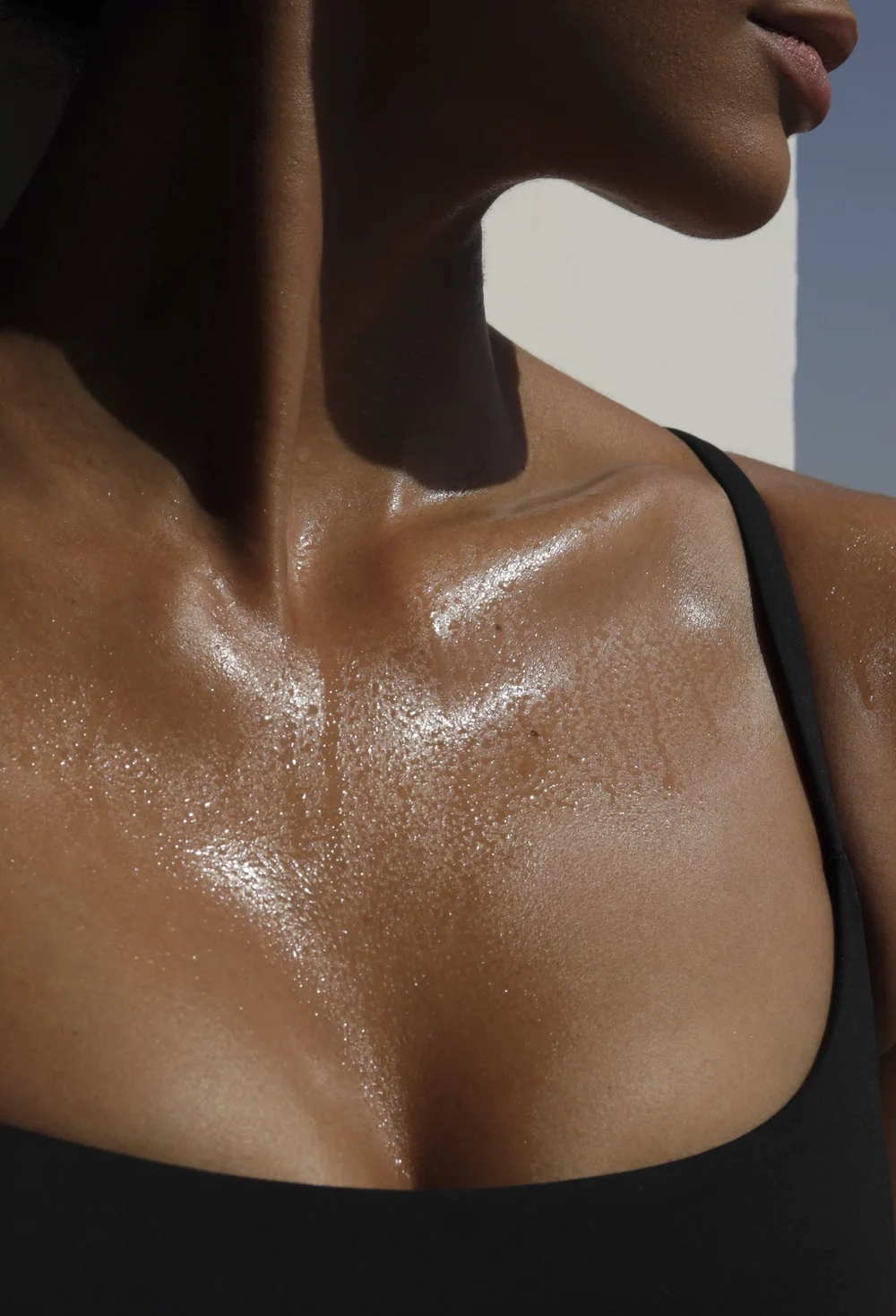 Plume Studio. See the project
How art direction differs across lifestyle sectors
The principles stay the same, but each sector has its own codes and its own traps.
| Sector | What the images must convey | Common trap |
|---|---|---|
| Wellness and fitness studios | The feeling after the session, community, the space | Generic gym imagery, over-posed bodies |
| Skincare and beauty | Texture, ritual, skin that looks real | Over-retouched skin, clinical packshots only |
| Interiors and furniture | Light, materials, how a room is lived in | Empty showroom shots with no life in them |
| Hospitality | A stay you can imagine, the details of a place | Wide-angle room shots that all look alike |
| Fashion and activewear | Movement, fit, the person wearing it | Catalogue poses with no attitude |
For a wellness studio, this often means shooting during a real class, in the studio's own light. For a skincare brand, it means getting close enough to see the texture of the cream on skin. For a furniture brand, it means a lived-in room rather than a set. If you are building the brand itself and not only its images, our guide on how to build a lifestyle brand covers positioning, community and the foundations that art direction expresses.
How we approach it
At Stevenson & Co, art direction always starts from the brand strategy, never from a moodboard of other brands. These are the steps we follow and what we check at each one.
- Write the feeling down. We agree on three to five words that describe the emotion the brand should leave, and on what it should never feel like. Every later decision is checked against them.
- Audit what already exists. We put every current image side by side: website, feed, packaging, ads. The question is simple: would a stranger know these all come from the same brand? Usually the answer shows exactly where the gaps are.
- Build the visual rules. Light, palette, casting, locations, props, framing and post-production, each with examples of yes and no. This becomes the art direction guide that photographers, creators and the internal team receive.
- Shoot to the brief. A shot list built around moments rather than products, a casting that fits the brand, and real locations whenever possible. We plan enough variety to feed several months of content, not only a campaign.
- Grade and select with discipline. A consistent grade and a strict selection matter as much as the shoot. Fewer strong images beat many uneven ones.
- Measure and adjust. We look at which images people save, send and click, and feed what we learn into the next shoot. Art direction is a living system, not a one-off deliverable.
The mistakes we see most often are predictable: a moodboard copied from a larger brand, so the result looks borrowed; a different photographer for every shoot with no shared brief; product shots that do not match the lifestyle images; and phone content that ignores the rules the shoot set. All of them come from the same cause, which is treating images as one-off assets instead of a system.
We also keep budgets honest. The cost of art direction depends on the number of shoot days, locations, casting, the size of the crew, post-production and usage rights, so there is no single price. The best way to scope it is to describe what you need the images to do over the next twelve months.
Bringing your art direction to life
A strong art direction for a lifestyle brand gives you three things: images people recognise without a logo, a feed and a website that feel like one place, and a clear brief that every photographer and creator can follow. It saves time on every shoot, because the hard decisions have already been made, and it makes the brand easier to remember, which is what every founder is really paying for.
Our lifestyle and wellness brands agency page explains how we work with brands in this space, and the Plume Studio case study shows how we work with a wellness brand from identity to content: Plume Studio became the number one pilates studio in Dubai on Google and ChatGPT and grew to 14K Instagram followers in 14 months.
At Stevenson & Co, this is the work we do with our clients: defining the feeling of a brand, turning it into clear visual rules and producing images that hold together across every channel. We work with founders in Paris, Dubai, Amsterdam and New York who want their brand to be recognised at first glance. If that is where you want to take yours, tell us about your project.
Frequently asked questions
What is art direction for a lifestyle brand?
It is the set of creative decisions that turns a lifestyle brand's strategy into images: the mood, light, colour palette, casting, locations, props, framing and retouching. Its goal is that every photo, video and post looks like it belongs to the same world, so people recognise the brand without seeing the logo.
How do you define an art direction for a lifestyle brand?
Start by writing three to five words that describe the feeling the brand should leave, and what it should never feel like. Then turn them into concrete rules on light, palette, casting, locations, props, framing and post-production, each illustrated with examples to follow and to avoid, and check every shoot against them.
What is the difference between an art director and a photographer?
The art director defines the visual world, writes the brief and makes the casting, location and selection decisions. The photographer translates that brief into images and controls light and framing. On a lifestyle shoot, both work together with a stylist, a producer and a retoucher, but one person should own the overall consistency.
Do lifestyle brands need professional photography for social media?
They need a professional standard for their hero content, because it sets the look everything else follows. Everyday posts can be shot by the team or a content creator on a phone, as long as they follow the same rules on light, framing and palette. Instagram's April 2026 update also favours original content over reposted material.
How much does art direction cost for a lifestyle brand?
There is no single price. The cost depends on the number of shoot days, locations, casting, crew size, post-production and image usage rights. The most useful way to scope it is to describe what the images need to do over the next twelve months, then plan shoots that cover that need.


