
Instagram for lifestyle brands: what grows a feed people trust
By Canelle Stevenson · · 11 min read

Instagram for lifestyle brands works when the feed feels like a place people want to spend time, not a catalogue they scroll past. For founders in fashion, beauty, wellness, interiors and hospitality, it is still the platform where a new customer forms a first impression, checks whether the brand is real and decides whether it belongs in their life. This guide explains what actually grows a lifestyle account today, based on what Instagram itself has published and on what we see when we build feeds for our clients.
What Instagram means for a lifestyle brand
An Instagram strategy for a lifestyle brand is the way a brand uses the platform to show a way of living rather than a list of products: its rituals, places, people, aesthetic and values. The account becomes the brand's editorial home, the place where someone understands in a few seconds what they are buying into.
That is the real difference between a lifestyle account and a product account. A product account posts launches, discounts and packshots. A lifestyle account tells a consistent story in which the product appears as evidence. If you are still defining that story, our guide on how to build a lifestyle brand covers the foundations that should come before any content plan.
| Product account | Lifestyle brand account | |
|---|---|---|
| Main subject | Products, features, price | A way of life, rituals, people |
| Why people follow | To hear about offers | To be inspired and to belong |
| What grows it | Promotions and paid reach | Shares, saves and word of mouth |
| What weakens it | A cheaper competitor | Inconsistent or opportunistic content |
Why Instagram still matters for lifestyle brands
The scale is hard to ignore. In September 2025, Mark Zuckerberg announced that Instagram had passed 3 billion monthly active users (Thurrott, 24 September 2025). In the same coverage, Instagram's head Adam Mosseri told Bloomberg that direct messages have become people's preferred way to share content, and that video now accounts for more than half of the time spent in the app.
Scale is not the whole story, though. The platform is crowded, and attention is harder to win than it was a few years ago. Rival IQ's 2025 Social Media Industry Benchmark Report, published on 25 February 2025, found that Instagram engagement dipped across every industry it studied, with health and beauty among the lowest-engaging sectors and home decor towards the bottom of the pack. In other words, the categories most lifestyle brands sit in are exactly the ones where generic content struggles most.
That is why the question for a founder is no longer whether to be on Instagram, but how to be worth following there.
What the Instagram algorithm rewards
Instagram has been unusually open about how it ranks content. In January 2025, Adam Mosseri said that "the top three signals that matter most for ranking are watch time, likes and sends", and advised creators to watch average watch time, likes per reach and sends per reach in their insights (Social Media Today, 22 January 2025). He added that likes matter slightly more for content shown to existing followers, while sends matter slightly more for content shown to people who do not follow you yet.
For a lifestyle brand, that last point is the important one. A post that people send to a friend in a DM is the signal that introduces your account to new audiences. A post that only earns polite likes from existing followers keeps you where you are.
The second published rule is originality. Since April 2024, Instagram has prioritised original content in its recommendations: when identical content appears on several accounts, only the original is recommended, content with visible watermarks is not recommended, and accounts that mostly repost other people's work without materially changing it can lose eligibility for recommendations (Instagram Creators, 30 April 2024). For brands that invest in their own art direction, this is good news: having your own images is now a measurable advantage.
| Signal | What it measures | What raises it |
|---|---|---|
| Watch time | Real attention | A strong opening second, rhythm, a story |
| Likes per reach | Approval from your community | Content that matches what followers expect from you |
| Sends per reach | The urge to pass it on | A useful tip, an address, a moment worth sharing |
| Originality | What belongs to you | Your own photos, videos and ideas |
Five things that grow a lifestyle brand's Instagram
1. A visual world people recognise
A strong lifestyle brand is recognisable before anyone reads its name. That comes from a consistent palette, light, framing, materials and way of photographing people, repeated across every post. Consistency is not decoration: it is what lets someone spot you in a crowded feed and connect you with a specific aesthetic. It should come from your brand identity and art direction, not from a filter chosen on the day.
2. Original content made for the brand
Stock imagery and recycled viral clips weaken an account, both for the algorithm and for the audience. In the Sprout Social Index published on 7 January 2025, based on a survey of 4,044 consumers, about half said original content is what makes their favourite brands stand out on social. One shoot planned around the brand, even a modest one, is worth more than a month of borrowed visuals.
3. An editorial line that tells a way of life
The most inspiring lifestyle accounts rotate a small number of content pillars: the product in context, behind the scenes and craft, people (founders, customers, creators), places and rituals, and genuinely useful advice. Before publishing, ask one question: why would someone save this or send it to a friend? A skincare tip, a favourite address, a morning routine or a styling idea gets shared; a promotional banner rarely does. Your brand voice should stay recognisable across all of these pillars.
4. Video, without abandoning the still image
Video now takes the majority of time spent on the app, and Reels remain the most effective format for reaching people who do not follow you. Even so, carousels and strong photography are still the backbone of a lifestyle feed, because they establish the aesthetic and are the posts people save. The right balance depends on your audience, and the only reliable way to set it is to read your own insights by format.
5. A community you look after, not just an audience
Follower count says little if it does not turn into conversation. Replying to comments and DMs, resharing customers' posts with their permission and asking real questions in Stories is the daily work that turns an audience into a community. It takes time and consistency, which is where many founders underestimate the workload. Our article on community management vs social media management explains how that work is usually split.
Instagram marketing by lifestyle category
Every category has its own codes on Instagram. The principle is the same everywhere (show how the product fits into someone's life), but what that looks like changes.
| Category | What tends to work | The common mistake |
|---|---|---|
| Fashion | Clothes worn in real life, styling, the making of a collection | A feed of flat lays on white backgrounds |
| Beauty and skincare | Texture close-ups, gestures, routines, real skin | Promises that feel too good to be true |
| Wellness and fitness | The class, the space, the community, the energy of a session | Motivational quotes with no faces |
| Interiors and home | Lived-in spaces, materials, atmosphere | Perfect rooms nobody seems to live in |
| Hospitality and travel | The stay as a story, details, people, the place at different hours | A brochure of empty rooms |
Values follow the same logic. A brand that stands for sustainability, craft or slow living has to prove it with visible facts (workshops, materials, how long products last) rather than slogans. On Instagram, values are shown, not claimed.
Influencers and creators: choosing the right partners
Influencer marketing is part of Instagram for almost every lifestyle category. Used well, it gives a brand what it cannot produce alone: the voice of someone a community already trusts. Used badly, it looks like a brand buying attention with nothing to say.
A few principles help. Choose creators for their fit with your world rather than their follower count: a smaller creator with a highly engaged wellness audience usually serves a skincare brand better than a large generalist account. Look at engagement and the quality of comments, not only reach. Leave creators their own tone of voice, and agree usage rights so you can reuse their content on your own channels. Then measure every campaign against goals set in advance, such as site visits, discount codes or qualified new followers.
Standing out without chasing every trend
Jumping on every trend is tempting and rarely pays off for a premium brand. The same Sprout Social Index found that a third of consumers think jumping on viral trends is embarrassing for brands, and 27% believe it only works within 24 to 48 hours of a trend's lifespan.
Standing out comes from codes that belong to you: a recurring series, a signature format, a particular way of filming your products or introducing your customers. A trend is only worth using if you can translate it into your own language without losing yourself. When in doubt, skip it. People follow a lifestyle brand for its point of view, not for its ability to copy what every other account is doing.
Posting frequency comes up in almost every conversation about Instagram. There is no universal number: a pace you can sustain for months at a consistent level of quality beats an intense schedule abandoned after six weeks. We cover the question in detail in how often a brand should post on social media.
Measuring what matters
An Instagram strategy is steered with a handful of well-chosen indicators, read every month. Likes on their own are flattering but incomplete. For a lifestyle brand, these are the numbers we watch first:
| Indicator | What it tells you | How often |
|---|---|---|
| Sends per reach | Whether content makes people want to share it | Monthly, by format |
| Saves | Whether content has lasting value | Monthly |
| Average Reel watch time | Whether video holds attention | Monthly |
| Share of reach from non-followers | Whether the account is reaching new people | Monthly |
| Link clicks and attributed sales | Whether Instagram contributes to revenue | Monthly, then quarterly |
These numbers only mean something when compared with your own history and tied to business goals. Instagram also works best as part of a system that includes a clear website, an email list and a consistent presence on Google. Our guide to measuring the performance of your social media strategy goes further on setting up that reporting.
How we approach it
We treat every Instagram account as an extension of the brand, never as a separate channel. In practice, the work follows the same steps.
- An audit of the account and the brand. We review the last twelve months of posts, performance by format, visual consistency and what people say in the comments, and we look at a few reference accounts in the category without trying to copy them.
- An editorial platform. We define three to five content pillars, the tone, the signature formats and what the brand will never post. This document keeps the account consistent when the team changes.
- Art direction and dedicated shoots. We produce original photos and videos for the brand, planned for Instagram from the framing stage: vertical formats, strong first seconds, series.
- A realistic calendar. We set a pace the team can keep, with planned content and room for what happens in the moment.
- A monthly read of the numbers. We follow sends, saves, reach beyond followers and traffic to the site, then adjust the formats that are not working.
The mistakes we see most often are always similar: a feed with no common thread, borrowed visuals, a brand that only talks about its offers, influencer partnerships chosen by follower count, and no measurement at all. None of them is serious, and all of them can be fixed with method.
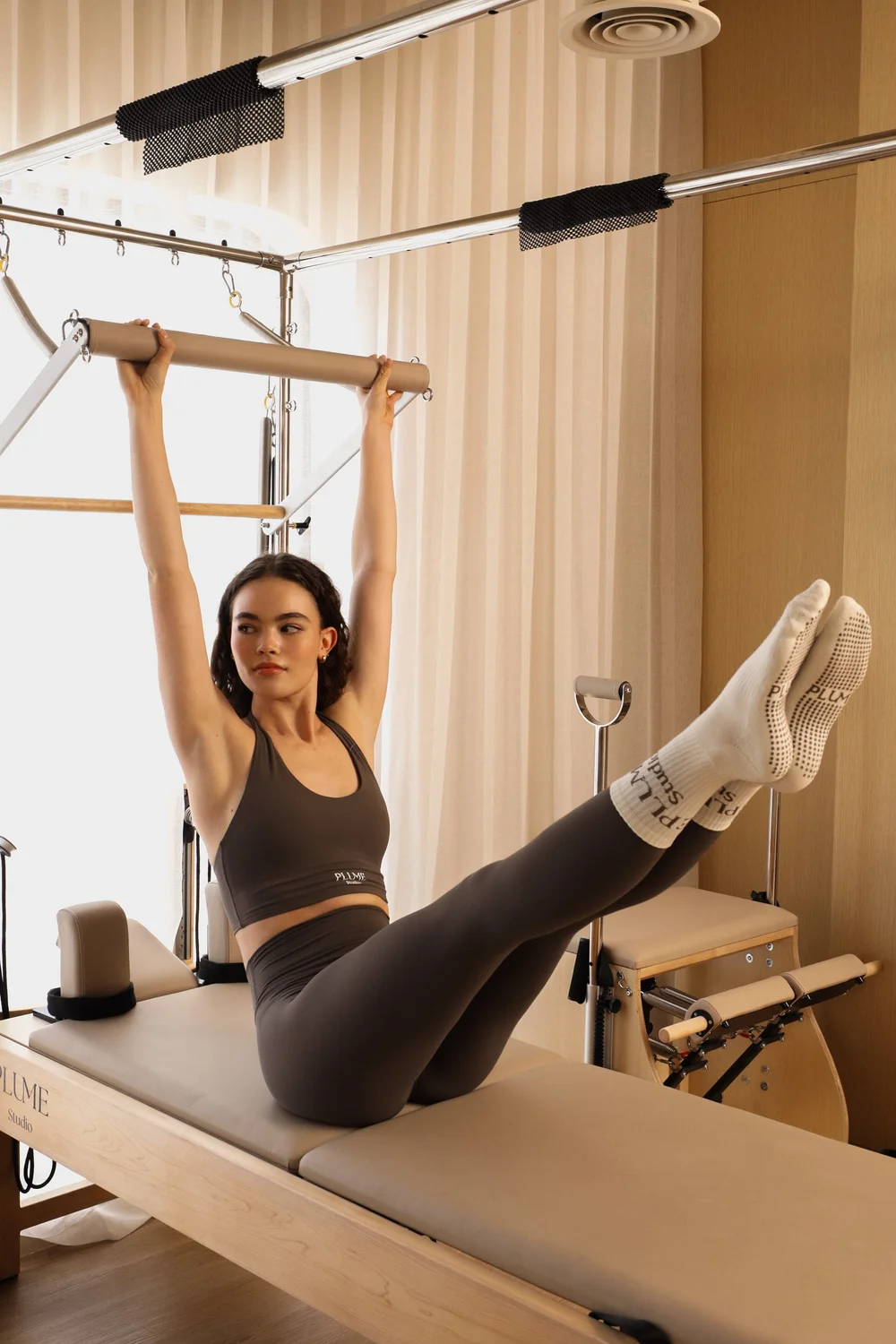 Plume Studio. See the project
At Stevenson & Co, this is the method we applied with Plume Studio, now the number one pilates studio in Dubai on Google and ChatGPT, whose Instagram account reached 14K followers in 14 months. The full story is in the Plume Studio case study.
Turning your feed into a way of life
A lifestyle brand's Instagram grows when it makes people want to belong to its world: images that look like you, content people want to send, a community you answer, and numbers read with a clear head. Everything else, from hacks to promises of overnight growth, comes a long way after. You can read more about how we work with brands in this space on our lifestyle and wellness brands agency page.
At Stevenson & Co, this is the work we do with our clients: Instagram accounts that extend the brand, with their own art direction, a clear editorial line and results measured every month. We work with founders in Paris, Dubai, Amsterdam and New York who want their feed to feel like a way of life rather than a shop window. If that sounds like your brand, tell us about it.
Frequently asked questions
How do lifestyle brands grow on Instagram?
By showing a way of life rather than a product list. That means a consistent visual identity, original photos and videos, content pillars people want to save and share, and a community that gets real replies. Growth then comes mostly from shares and recommendations to people who do not follow you yet.
What does the Instagram algorithm prioritise for brands?
According to Adam Mosseri in January 2025, the top three ranking signals are watch time, likes and sends. Likes weigh slightly more for followers and sends slightly more for non-followers. Instagram also recommends original content first and does not recommend content with visible watermarks.
Should a lifestyle brand work with influencers on Instagram?
It is not compulsory, but it often helps in fashion, beauty and wellness. Choose creators whose world and audience match yours, look at engagement and comment quality rather than follower count, agree usage rights, and set measurable goals before each campaign.
Are Reels or photos better for a lifestyle brand?
Both have a role. Reels are the most effective way to reach new people, while carousels and strong photography establish your aesthetic and are often the posts people save. Read your insights by format each month to find the right balance for your audience.
Which Instagram metrics should a lifestyle brand track?
Start with sends per reach, saves, average Reel watch time, the share of reach coming from non-followers, and link clicks or attributed sales. Compare them month on month with your own history rather than with generic benchmarks, and tie them to business goals.


