How to build a lifestyle brand people want to belong to
By Canelle Stevenson · · 9 min read

Learning how to build a lifestyle brand starts with accepting that you are not really selling a product. You are offering a way of living that people want to recognise themselves in, and the product is the proof. That is why a cream, a pilates class or a sofa can become a sign of belonging, and why so many brands that call themselves lifestyle never quite get there.
What is a lifestyle brand?
A lifestyle brand is a brand whose promise goes beyond what its products do, to embody a way of life, a set of values and an aesthetic that its audience identifies with. Customers buy what it makes, but they also buy the version of themselves it reflects and the community it lets them join.
The difference with a conventional brand comes down to one question: what does the brand talk about when it is not talking about its product? A product brand talks about features, price and performance. A lifestyle brand talks about places, rituals, people and a point of view on everyday life. The product becomes the tangible evidence of that point of view, not the only subject.
| Product brand | Lifestyle brand | |
|---|---|---|
| What it sells | A solution to a need | An identity and a sense of belonging |
| What it talks about | Features, benefits, price | A way of life, values, people |
| What builds loyalty | Quality and price | Emotional connection and recognition |
| What weakens it | A cheaper competitor | A gap between what it says and what it does |
A lifestyle brand is therefore not a product category such as fashion, fitness, beauty or home. It is a way of building a business. A pilates studio, a skincare line, a boutique hotel or a premium furniture maker can all become lifestyle brands, provided they accept what that requires.
Why the lifestyle model works now
The market rewards brands that mean something to people. According to McKinsey's Future of Wellness research, published on 20 November 2024, 82% of US consumers now consider wellness a top or important priority, and the global consumer wellness market has reached around $1.8 trillion a year. The Global Wellness Institute's 2025 Global Wellness Economy Monitor puts the wider wellness economy at $6.8 trillion in 2024, with a forecast of about $9.8 trillion by 2029.
Trust and values matter as much as the size of the market. The 2025 Edelman Trust Barometer special report on brand trust, based on fieldwork from April and May 2025, found that 80% of people trust the brands they use, and that 73% say their trust would increase if a brand authentically reflected today's culture. A GWI survey commissioned by Givsly and released in May 2025 found that 55% of US adults feel more loyalty to brands that publicly share their values, and 64% would pay more for brands that reflect them.
Put simply: demand is there, competition is fierce, and the brands that win are the ones people feel part of. In a crowded market, a better product is rarely enough on its own for long. What protects a lifestyle brand is the place it occupies in its customers' lives, which a competitor cannot copy as easily as a formula or a price.
The foundations of a lifestyle brand
Before content, influencers or launches, a lifestyle brand needs a few things defined in writing. Without them, every campaign reinvents the brand and the audience remembers nothing.
A clear point of view on how to live
The first question is not "what do we sell?" but "what kind of life do we make possible or desirable?". Describe a day in the life of your ideal customer: where they live, what they read, what they refuse, what gives them pleasure. That description becomes the compass for every decision, from art direction to the partners you choose.
Values you can see, not values you state
Values only count when they show up in concrete choices: materials, suppliers, how customers are treated, what the brand agrees not to do. A brand that claims sustainability while multiplying packaging and throwaway collections loses credibility faster than one that never promised anything. Three or four values that genuinely guide decisions are worth more than a long list nobody can remember.
A recognisable brand identity
The way of life has to become signs: a name, a logo, a palette, typography, a tone of voice, a photographic style. We cover this in detail in our guide to what brand identity is and why it matters more than a logo. For a lifestyle brand, art direction carries particular weight, because it makes the vision visible before anyone reads a word.
A precise target audience
Trying to appeal to everyone is the most common mistake. A strong lifestyle brand accepts that it excludes: it speaks to a specific tribe, with its own codes. Paradoxically, that is what makes it attractive well beyond its core. Our article on brand positioning explains how to make that choice deliberately.
How to build a lifestyle brand, step by step
Whether you are launching from scratch or turning an existing product brand into a lifestyle brand, the path is broadly the same. Steps can overlap, but the order matters: you cannot tell the story of a way of life you have not defined yet.
| Step | Goal | What you produce |
|---|---|---|
| 1. Strategy | Define the vision, values, audience and positioning | A written brand platform |
| 2. Identity | Turn the vision into recognisable signs | Visual identity, tone of voice, guidelines |
| 3. Art direction | Set the photographic and video world | Moodboards, shoots, image library |
| 4. Content | Tell the story of the lifestyle, not just the product | Editorial line, content calendar |
| 5. Community | Create reasons for people to gather and talk | Events, collaborations, ambassador programme |
| 6. Extension | Grow the offer without diluting the brand | New ranges, partnerships, spaces |
Step 1: write the brand platform
The brand platform sets out your purpose, mission, values, personality and positioning against others in your market. It should be short enough for everyone on the team to quote. If it takes more than one sentence to say what makes you different, the work is not finished.
Step 2: build the visual and verbal identity
Visual identity and tone of voice follow directly from the platform. A brand that stands for slowness does not speak in capitals and saturated colours; a brand that stands for energy does not whisper. Consistency between substance and form is what makes a brand believable.
Step 3: set the art direction
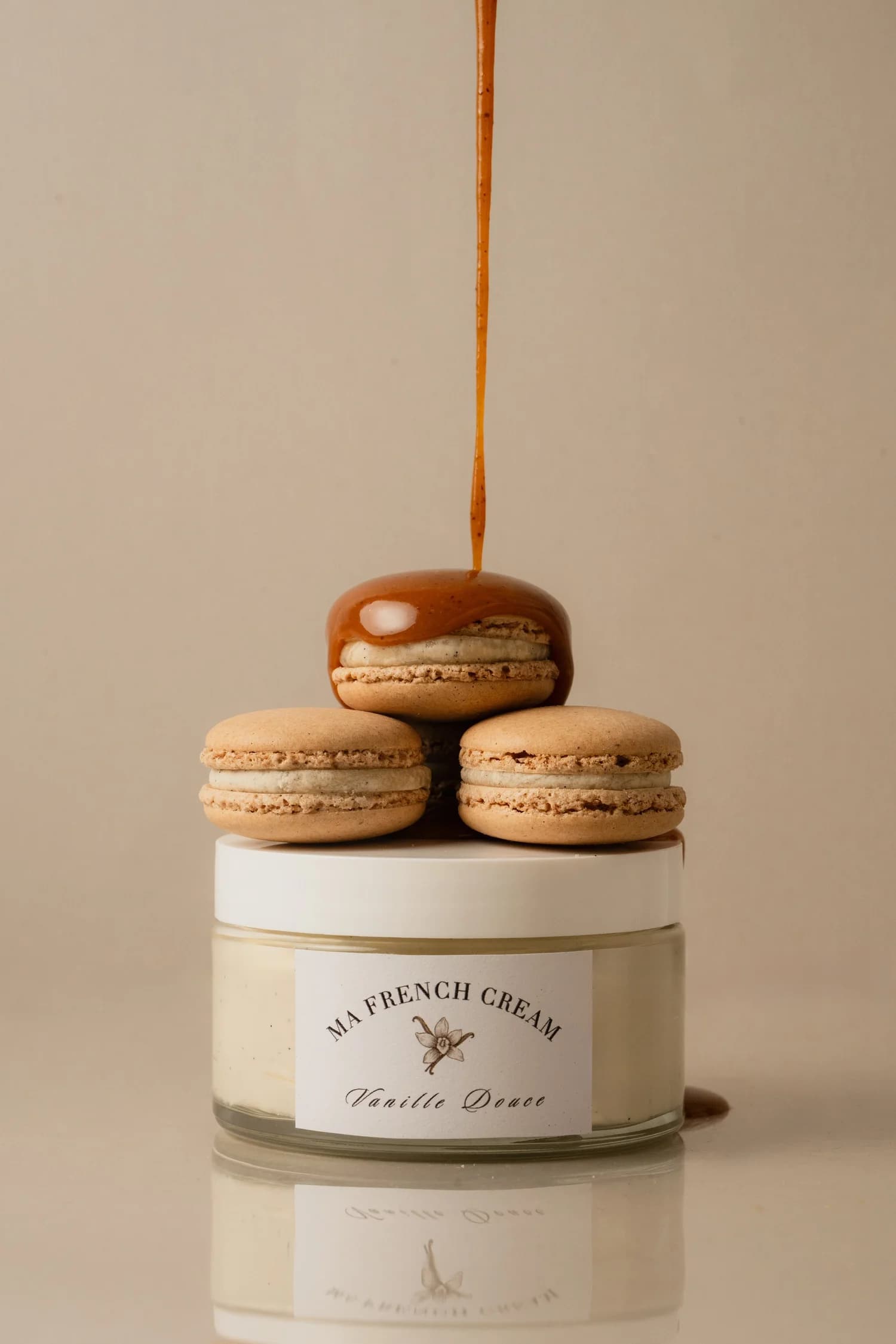
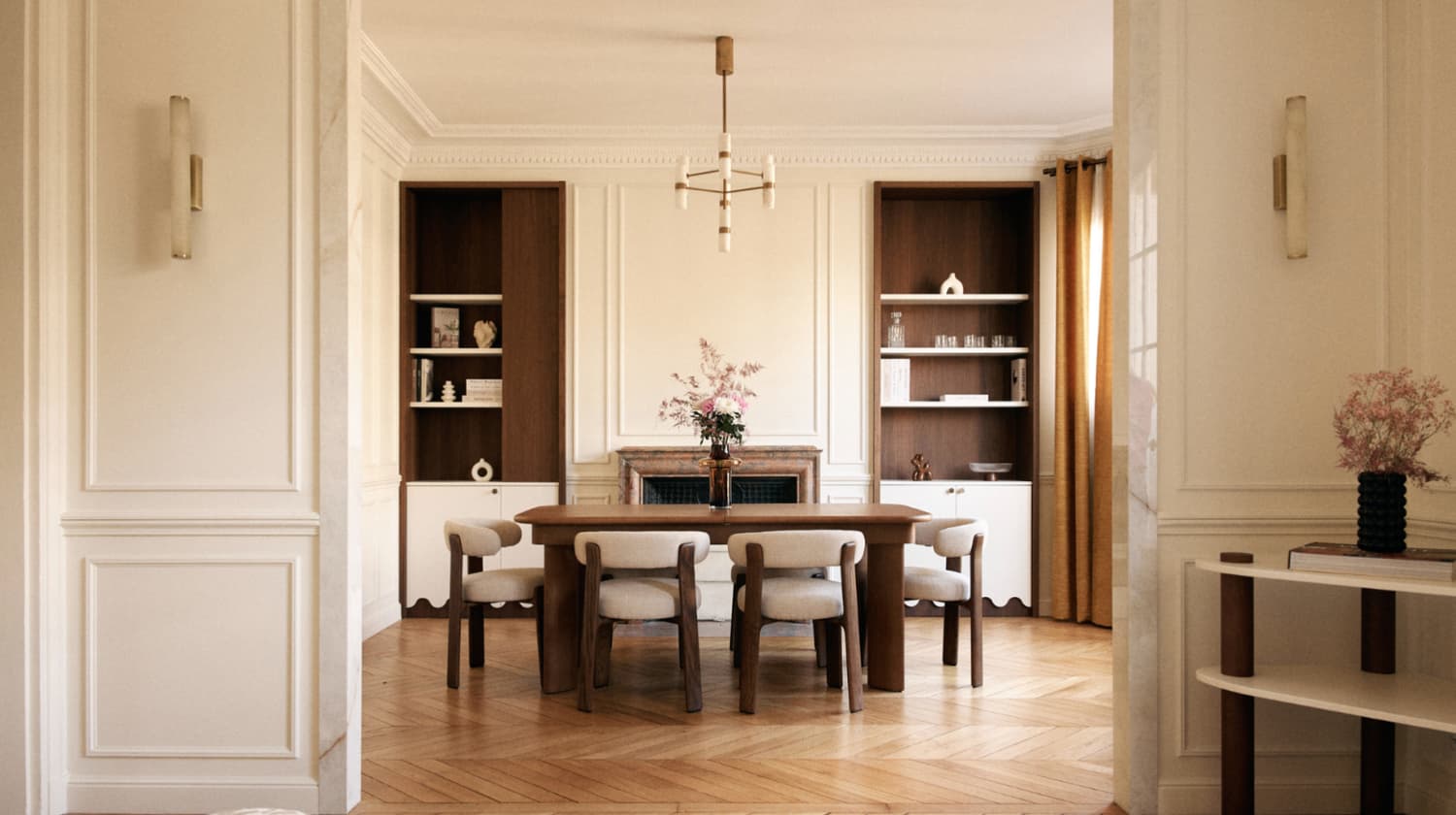
For a lifestyle brand, the image is the first language. Light, framing, locations, models, styling: every choice says something about the life on offer. Shoots are not only there to show products; they build a world the audience wants to step into. Our guide to what art direction is and how it shapes your brand goes deeper into this.
 Ma French Cream. See the project
Step 4: tell the story of the lifestyle
The editorial line of a lifestyle brand spends a lot of time on what surrounds the product: rituals, places, people, behind the scenes, advice. The product appears naturally within that world rather than as an argument repeated in every post. On social media, this takes a consistent voice, which we explain in our piece on building a consistent brand voice on social media.
Step 5: give the community a reason to exist
A community cannot be declared; it is built through repeated occasions to come together: an event, a class, a collaboration, a circle of loyal customers who are given a voice. Influencer partnerships can speed up awareness, provided you choose people who genuinely live the way of life the brand stands for.
This is the work behind Plume Studio, now the number one pilates studio in Dubai on Google and ChatGPT, which grew to 14K Instagram followers in 14 months and now draws more than 5K organic visits a month. The full approach is in the Plume Studio case study.
Step 6: extend the offer without diluting it
Once the brand is established, extension becomes natural: new ranges, collaborations, spaces, content. The rule is simple: every extension should be a logical consequence of the way of life you stand for. A collection that would make no sense to your tribe weakens the brand, even if it sells.
How we approach it
At Stevenson & Co, we treat a lifestyle brand as a system to be managed, not a campaign. Our approach follows four stages.
- Listen before writing. We start with the founders, existing customers and reviews. What people say about a brand unprompted often reveals the way of life it already embodies.
- Make the positioning choice. We write in one sentence what the brand stands for and what it refuses. If that sentence could describe another business, we start again.
- Build the whole world at once. Identity, tone, art direction and shoots are designed together, so that every touchpoint, from the website to the packaging, tells the same story.
- Measure and adjust. Every decision is tracked with data: audience growth, engagement rate, branded search, organic traffic, sales. What does not work is corrected, not defended.
The mistakes we see most often are always the same: a brand that calls itself lifestyle but only posts product shots; an aesthetic borrowed from the trend of the moment rather than from its own vision; stated values that concrete choices contradict; and impatience that changes direction every three months. A lifestyle brand is built over time, and consistency is its greatest asset.
Lifestyle brand trends and challenges to watch
A few challenges shape the lifestyle sector today. The first is proof over promise on sustainability: audiences expect evidence, not slogans. The second is the blurring line between lifestyle and wellness, as fitness, skincare, food and home increasingly meet in a single idea of a balanced life.
The third is discovery through AI. Edelman's 2025 brand trust report notes that among the 55% of people who use generative AI platforms, 91% use them for shopping in some way, such as researching brands or comparing products. A lifestyle brand therefore needs to be clear and consistent wherever it is described, so that search engines and AI assistants understand it as well as people do.
Choosing a partner to build your lifestyle brand
The right partner is not necessarily the biggest agency, but the one that understands your sector and can connect strategy, image and results. A few criteria help:
- work in lifestyle or wellness with measurable, verifiable results;
- the ability to produce art direction and content, not only to advise;
- a clear measurement method, with indicators agreed from the start;
- real curiosity about your way of life and your community, visible from the first conversation.
You can see how we work on our lifestyle and wellness brands agency page.
A brand people want to belong to
A successful lifestyle brand is recognisable by one simple sign: its customers talk about it as part of their life, not as a purchase. Getting there takes a clear vision, values that show, a consistent identity, strong imagery and a community nurtured with patience. None of it can be improvised, and all of it can be built.
At Stevenson & Co, this is the work we do with our clients: lifestyle and wellness brands whose vision can be seen, felt and measured. We work with founders in Paris, Dubai, Amsterdam and New York who want to build a brand their audience wants to belong to. If that sounds like your next chapter, get in touch with us.
Frequently asked questions
What is a lifestyle brand?
A lifestyle brand is a brand whose promise goes beyond what its products do, to embody a way of life, values and an aesthetic its audience identifies with. People buy it for what it says about them and for the community it connects them to. It can exist in fashion, fitness, beauty, hospitality or home.
How do you start a lifestyle brand from scratch?
Start by writing down the way of life you stand for, your values and a precise target audience. Then turn that vision into a visual identity, a tone of voice and an art direction. Only then launch content and community activity, telling the story of the lifestyle rather than only the product.
Can an existing product brand become a lifestyle brand?
Yes, but it takes more than new visuals. The brand has to broaden what it talks about, from product features to the rituals, places and people around its use, and revisit its platform, art direction and editorial line so they tell the same story. The shift is gradual and needs consistency over several months.
How long does it take to build a lifestyle brand?
There is no fixed timeline, because it depends on your starting point, your market and your resources. Strategy and identity can be defined in a few months, but the sense of belonging that defines a lifestyle brand builds over time, through consistent content, imagery and community work.
What makes a lifestyle brand successful?
A clear point of view, values that are visible in real decisions, a consistent identity, strong imagery and a community that is nurtured with patience. The clearest sign of success is that customers talk about the brand as part of their life rather than as a purchase.